
FormulaPilot Blog
Handmade Soap Oils: How Your Oil Blend Changes Lather, Hardness, and Skin Feel
In handmade soap, the oil blend does more than change the ingredient list. It affects how fast the bar hardens, how it lathers, how quickly it wears away, and whether it feels briskly cleansing or milder in use.
Explore the formula builder in FormulaPilot.

Making handmade soap gets much easier once you stop thinking of oils as a list of names and start thinking about what those oils contribute to the whole bar.
Coconut oil is not just coconut oil. Olive oil is not just olive oil. In soapmaking, oils react with alkali to become the salts of fatty acids, and those fatty acids strongly influence how the finished bar behaves. That is why two recipes with the same total oil weight can feel very different in the shower: one may lather quickly and rinse very clean, while another feels creamier, milder, or slower to harden.
For small makers, this is useful because it turns recipe adjustment into a practical process. If a bar feels too stripping, you do not need to guess wildly. If it goes soft in the dish, or if the lather feels flat, you can look at the oil blend and make more targeted changes.
What oils really change in handmade soap
Your oil blend affects several qualities at once:
- How quickly the soap traces and firms up
- How hard the bar becomes after curing
- Whether the lather is big and bubbly or dense and creamy
- How fast the bar dissolves in use
- Whether the wash feels briskly cleansing, mild, or slippery
- How stable the oils are before and after soaping
That last point often gets overlooked. Some oils are chosen for a lovely skin feel in leave-on products, but in rinse-off soap, their higher unsaturation can bring tradeoffs such as slower hardening or greater oxidation risk. In other words, the best oil for a face serum is not automatically the best oil to use at a high percentage in bar soap.
The fatty-acid patterns behind soap feel
You do not need to memorize every fatty acid to make better soap, but a few broad patterns are worth knowing.
Lauric and myristic acids: fast bubbles and stronger cleansing
Oils rich in lauric and myristic acids, especially coconut and palm-kernel oils, are known for producing quick lather and strong cleansing power. They help make a bar feel lively and easy to rinse. If you want a soap that lathers readily even in hard water or gives that immediate bubbly response, these oils usually play a major role.
The tradeoff is that, at higher proportions, they can feel more degreasing to some users. A bar that seems "squeaky clean" to one person may feel too stripping to another. If your testers say the soap feels a little harsh, a high proportion of these fast-bubbling oils is one of the first places to look.
Palmitic and stearic acids: hardness and creamy lather
Palmitic and stearic acids are common in palm oil, many butters, and some animal fats. These fatty acids tend to support a harder, longer-lasting bar and a denser, creamier lather rather than a very fluffy one.
If your soap melts away too fast in the shower, gets mushy in the soap dish, or feels thin in lather, this part of the blend may be too low. Bars with a good contribution from palmitic- and stearic-rich fats often feel more substantial in use and hold up better with everyday handling.
Oleic acid: mild, slippery, slower to firm
Oleic acid is abundant in olive oil and many high-oleic oils. In soap, it is often associated with a milder, more slippery feel and gentler character in use. It can be a good direction if your current recipe feels overly cleansing.
But oleic-rich recipes often move more slowly and may take longer to become firm and satisfying. They can benefit from patience in curing. If a bar feels underwhelming at first, the issue may not be that the recipe is wrong; it may simply need more time to dry down and settle into its final performance.
Linoleic and linolenic acids: conditioning feel with more oxidation risk
More-unsaturated oils can contribute a conditioning feel in soap calculators and formulation language, but they also tend to be more prone to oxidation and rancidity. That does not mean they are unusable. It means freshness, storage, and overall formula balance matter.
If you love an oil that is high in linoleic or linolenic acid, use it intentionally rather than assuming more is always better. A lovely fresh bar can disappoint later if the oils were old, poorly stored, or used so heavily that shelf stability becomes a weak point.
It also helps to keep expectations realistic. In soapmaking, terms like "conditioning" describe formulation tendencies. They are not proof that a rinse-off bar moisturizes skin in the way a leave-on product would.
Why whole-blend thinking works better than hero-ingredient thinking
A common beginner mistake is expecting one special oil to transform a soap on its own. In practice, soap performance comes from the blend.
A recipe with a modest amount of coconut oil can feel balanced and pleasant when it is paired with enough oleic, palmitic, and stearic support. That same coconut percentage may feel very different if the rest of the recipe is soft, highly unsaturated oils. Likewise, an olive-rich bar can feel elegant and mild, but if the formula lacks enough structure elsewhere, it may seem slimy, slow to lather, or too soft for your preferences.
This is why formulation software is so helpful. In FormulaPilot, you can compare recipes side by side and see how changing one oil shifts the overall pattern instead of chasing a single ingredient trend.
How to troubleshoot a soap by the way it feels
When a finished bar disappoints you, describe the problem in plain sensory terms first. Then connect that feeling back to the oil blend.
If the soap feels too stripping
Look first for a high contribution from lauric- and myristic-rich oils. You may be able to reduce the share of coconut or palm-kernel oil and replace part of it with oils richer in oleic acid, or with fats that add more creamy support.
Also consider whether the bar is very young. Some soaps feel harsher before they are fully cured. If your recipe is otherwise reasonable, more cure time may improve the experience before you make major changes.
If the soap is soft or disappears quickly
Check whether the formula leans heavily on more-unsaturated liquid oils without enough palmitic and stearic support. Increasing harder fats or butters can help the bar last longer and feel more substantial.
This is especially useful when customers like the mildness of a recipe but complain that it gets mushy in the shower. The answer is often not to make it more cleansing. It is to improve the structural side of the blend.
If the lather is dull or low
A soap rich in oleic acid may feel pleasant but produce slower, lower lather. If you want more immediate bubbles, a controlled increase in lauric- and myristic-rich oils can help. If the lather exists but feels thin, a boost in palmitic and stearic contributors may make it creamier and fuller.
This is where knowing whether you want "more bubbles" or "better body" matters. Those are not always the same adjustment.
If the soap seems fine at first but ages poorly
Look at the freshness and storage of your oils, especially if the recipe uses more highly unsaturated ingredients. Oxidation issues are not only about recipe design on paper. They are also about the condition of the raw materials you start with and how they are stored before use.
A practical small-batch test that actually teaches you something
If you want to understand oil choices without confusing the results, change one variable at a time.
Try making three small batches with the same process, fragrance plan, color plan, water approach, and cure conditions. Change only the oil blend.
For example:
- Batch A: your current formula
- Batch B: slightly less coconut or palm-kernel oil, replaced with more olive or another high-oleic oil
- Batch C: same as Batch A, but with a modest increase in a harder fat or butter that adds palmitic/stearic support
Then evaluate the bars at the same checkpoints, such as unmolding, one week, and full cure. Pay attention to:
- Firmness in hand
- Ease of cutting
- Lather speed
- Bubble size versus creaminess
- How quickly the bar softens in water
- Skin feel during and after rinsing
This kind of narrow test gives much clearer answers than rewriting the whole recipe at once. If all three bars are fragranced differently, colored differently, or cured in different spots, you learn much less. A controlled comparison turns your impressions into usable formulation knowledge.
A simple way to think about balancing a soap recipe
Many successful handmade soap formulas combine three broad jobs in one bar:
- Fast, cleansing lather from lauric/myristic contributors
- Hardness and creamy longevity from palmitic/stearic contributors
- Mildness or slip from oleic-rich contributors
That does not mean every formula must be built the same way. It means most satisfying bars feel balanced because they answer more than one performance need at once.
If your recipe overemphasizes one side, the weakness often shows up quickly in use. Very bubbly can become drying. Very mild can become soft or low-lather. Very hard can still feel less pleasant if the rest of the profile is not supporting it.
Cure time is part of the formula, not an afterthought
Oil choice and cure time belong together. A bar rich in oleic acid may need more patience than a maker expects, especially if they compare it too early with a recipe built around faster-hardening fats. If you judge all soaps at the same young age, you may reject formulas that simply mature more slowly.
That is why good soap notes matter. Record not just the recipe, but when the bar became easy to unmold, when it felt properly firm, and when the lather reached the quality you wanted. FormulaPilot can help organize those comparisons, but the deeper habit is sensory observation over time.
One regulatory note worth knowing
In the United States, the FDA says a product falls under its definition of soap when it is mainly the alkali salts of fatty acids, those compounds provide the cleaning action, and the product is marketed only as soap. If you market the product with cosmetic purposes or other claims, it may be regulated differently. For handmade makers, the practical lesson is simple: do not assume every bar is treated the same just because you made it by hand.
That point does not change how a recipe lathers or cures, but it is useful context when you are deciding how to describe what your soap does.
The takeaway for makers
If you want better handmade soap, start by reading the feel of the bar as a clue to the fatty-acid balance underneath it.
A soap that is too cleansing often points toward too much lauric and myristic influence. A soft, fast-dissolving bar may need more palmitic and stearic support. A mild but sleepy bar may be rich in oleic acid and simply need either more cure time or a small adjustment for lather. And if a recipe looks beautiful on paper but develops stability problems, the more-unsaturated oils may be asking for a lighter hand, fresher stock, or better storage.
Once you begin making changes this way, recipe development feels less like guessing and more like steering. That is the real advantage of understanding oils in soap: not just knowing what each oil is called, but knowing what it is likely to do when the bar finally meets water.
References
- Frequently Asked Questions on Soap — U.S. Food and Drug Administrationhttps://www.fda.gov/cosmetics/cosmetic-products/frequently-asked-questions-soap
- Is It a Cosmetic, a Drug, or Both? (Or Is It Soap?) — U.S. Food and Drug Administrationhttps://www.fda.gov/cosmetics/cosmetics-laws-regulations/it-cosmetic-drug-or-both-or-it-soap
- The soaping oils: what each one brings to a bar — Soap Formulatorhttps://soapformulator.com/learn/soaping-oils-guide
- Fatty acids and soap qualities: what the numbers mean — Soap Formulatorhttps://soapformulator.com/learn/fatty-acids-and-soap-qualities

Homemade Lip Balm Turned Grainy? How to Troubleshoot the Cooling Process
A grainy lip balm is often less about the recipe than the way the batch cooled and set. Here’s how to troubleshoot melting, pouring, cooling speed, and storage changes so you can get closer to a smooth, reliable balm texture.
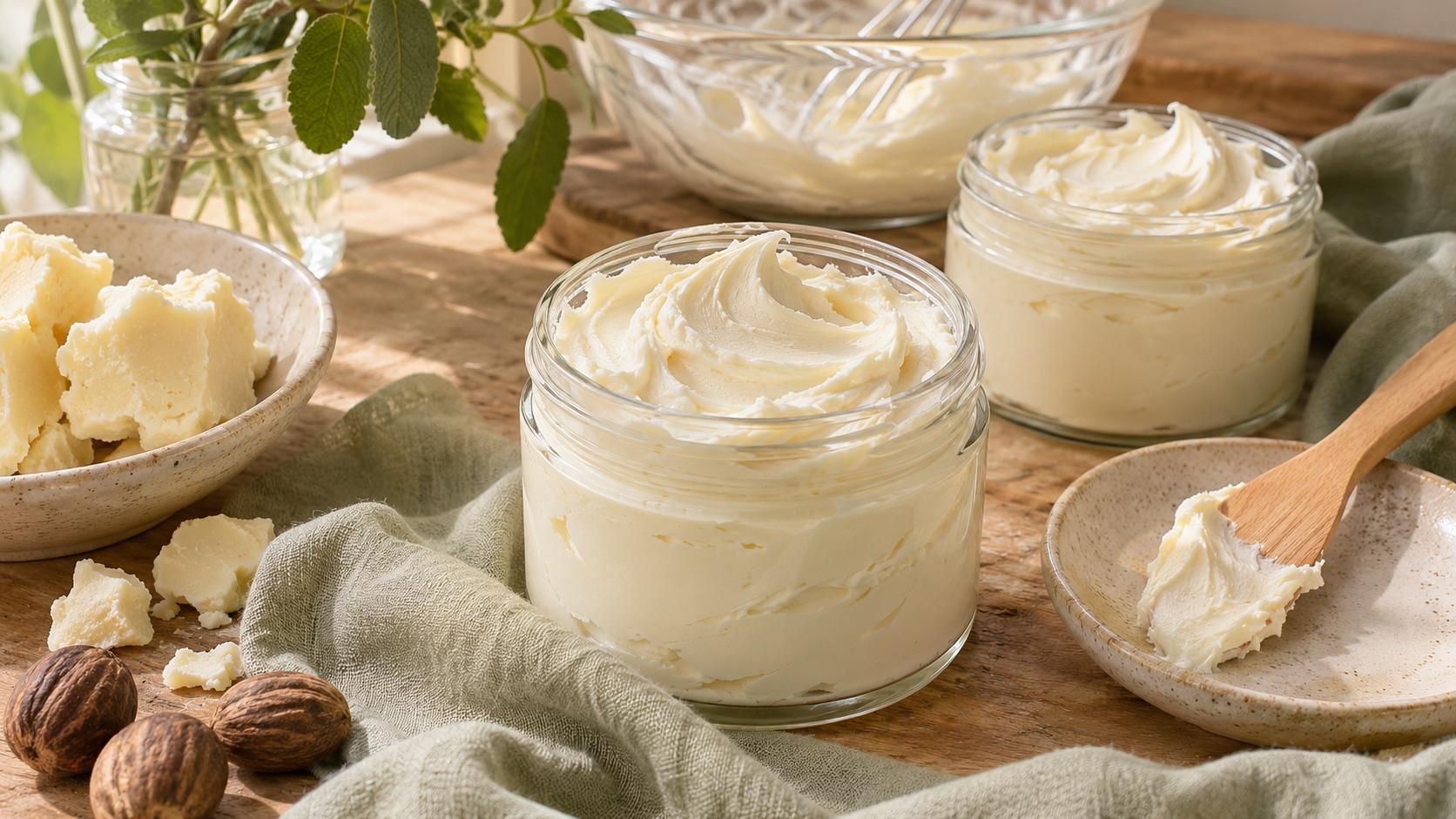
Body Butter Texture: How Cooling and Whipping Change the Final Feel
In homemade body butter, texture is shaped as much by process as by ingredients. Here’s how cooling and whipping change firmness, graininess, and fluffiness, plus a simple way to test what works for your formula.

Lotion Thickness: How to Adjust Viscosity One Change at a Time
If a lotion feels too thin or too thick, the safest fix is usually not a last-minute scoop of extra thickener. Here’s how to adjust lotion viscosity one small, weighed change at a time while keeping the rest of the formula and process steady.