FormulaPilot Blog
Body Butter Texture: How Cooling and Whipping Change the Final Feel
In homemade body butter, texture is shaped as much by process as by ingredients. Here’s how cooling and whipping change firmness, graininess, and fluffiness, plus a simple way to test what works for your formula.
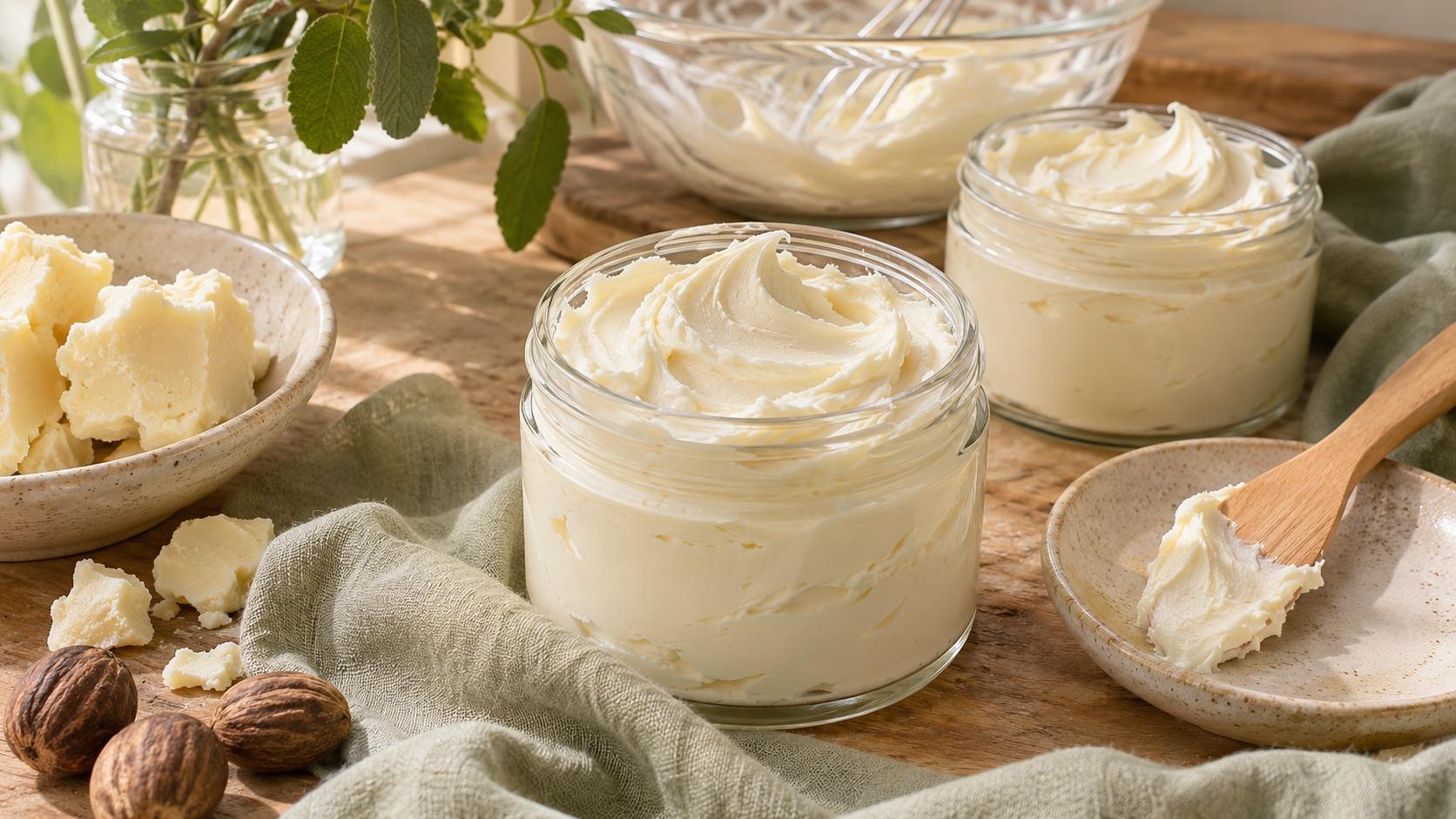
Homemade body butter can contain the exact same oils and butters yet feel completely different from batch to batch. One jar may be dense and silky, another airy and mousse-like, and another slightly grainy a few days later. The difference is often not the ingredient list alone. Cooling and whipping have a major effect on the final texture.
For small makers, this is useful news because it means texture problems are often process problems you can improve. If your formula is already close to where you want it, changing how you cool or whip the batch may get you further than changing every butter and oil in the recipe.
Why cooling matters so much in body butter
An anhydrous body butter gets its structure as the melted fats cool and crystallize. That crystal network is what gives the product body, firmness, and part of its skin feel. When cooling is uneven, very slow, interrupted, or followed by temperature swings, the butter may develop a less pleasant texture, including coarser crystals that can feel grainy.
This is especially relevant in formulas built around soft butters such as shea butter. A smooth melted mixture does not stay smooth automatically. What matters is how that mixture sets up into a solid or semi-solid structure.
That does not mean there is one perfect cooling speed for every formula. Different butters, liquid oils, and batch sizes behave differently. A small jar can set fast enough in a cool room, while a larger batch may hold heat much longer and crystallize differently. That is why experienced formulators tend to talk about repeatable process, not one universal rule.
Faster cooling is not always the whole answer
Makers often hear that the fix for graininess is to cool body butter as fast as possible. That advice can be too simplistic.
Practical formulating guidance from Formula Botanica points toward a gentler, more controlled approach for shea-based products: melt carefully, then cool with stirring, and use refrigerator chilling as a helpful option for small batches when needed. That is different from saying every body butter should always go straight into the fridge.
In practice, the better question is: what cooling process gives *your* formula the most consistent texture?
A useful starting process looks like this:
- Melt butters and oils gently until just fully liquid.
- Remove from heat rather than holding the batch hot longer than necessary.
- Stir during cooling so the mixture sets evenly.
- If needed, chill a small batch briefly to help it set, then continue observing texture.
- Keep the process the same from batch to batch when you evaluate results.
The reason this works well as a starting point is that it reduces unnecessary heat exposure and gives you more control over how the structure forms. If you are constantly changing both formula and process at once, it becomes hard to tell what actually improved the texture.
What whipping actually changes
Whipping does not just make body butter look pretty in the jar. It changes the texture by incorporating air into the thickening fat mixture.
That trapped air makes the butter feel lighter and fluffier than the same formula left unwhipped. It also changes how the product occupies space in the container. A whipped butter usually has more apparent volume than an unwhipped version made from the same batch weight.
This matters in two practical ways. First, a whipped body butter can seem softer and less dense even if the ingredient percentages are identical. Second, if you fill jars by volume rather than by weight during experiments, the comparison can be misleading because whipped and unwhipped versions do not pack the same way.
Whipping is most successful when the mixture has cooled enough to thicken but is still soft enough to beat evenly. If you try to whip while the batch is too warm, it may stay glossy and loose and fail to hold much air. If you wait until it is too firm, it can whip unevenly and leave a heavy or clumpy texture.
The best endpoint is not a single temperature that applies to all formulas. It is a visual and tactile stage: soft, thickened, and able to hold some structure.
How cooling and whipping work together
Cooling creates the structure. Whipping modifies that structure by aerating it.
That means whipping cannot fully rescue a poor cooling process. If your butter is already setting with a coarse or unstable texture, whipping may hide the problem temporarily but not necessarily prevent graininess from showing up later. On the other hand, a well-cooled butter may still feel too dense for your target unless you whip it.
Think of it this way:
- Cooling affects crystal formation, firmness, and smoothness.
- Whipping affects lightness, apparent volume, and spread feel.
- Together they shape the final user experience.
This is why two makers can use a similar formula and report very different results. One may pour and leave the butter to set undisturbed. Another may stir during cooling and whip at the thickened stage. Both made body butter, but not the same texture.
A practical experiment for small makers
If you want to improve texture without overhauling your recipe, run a simple side-by-side process test.
Make one batch of your usual body butter base, then divide it into two or three smaller portions. Keep the formula identical and change only the cooling and whipping steps.
For example:
- Portion A: Cool at room temperature with occasional stirring, then jar unwhipped.
- Portion B: Cool at room temperature with stirring until thickened, then whip.
- Portion C: Briefly chill to encourage setting, then whip once thickened.
Use the same container size for each test and label them clearly. Then compare:
- How quickly each portion thickens
- How easy it is to whip
- How fluffy or dense it feels in the jar
- How smooth it feels on skin
- Whether any graininess appears after a few days or after a warm-cool temperature swing
This kind of test is where formulation notes become extremely helpful. If you use FormulaPilot as your formulation software, record not only the recipe but also the process details: batch size, room conditions, whether you stirred during cooling, whether you used the refrigerator, and when you started whipping. Those notes make it much easier to repeat a success instead of guessing what you did last time.
Troubleshooting common texture results
If your body butter feels grainy, look first at the cooling history. The issue may come from how the fats crystallized rather than from a bad ingredient choice. Remelting and cooling more deliberately with stirring is often worth testing before reformulating the whole product.
If your butter is too dense, whipping may help create a lighter feel without changing the oil phase. But remember that aeration changes the apparent volume, so evaluate by weight and feel, not just by how full the jar looks.
If your butter will not whip well, the mixture may be at the wrong stage. Let it cool further if it is still thin and liquid-like. If it has gone too firm, gentle rewarming may be needed before trying again.
If one batch turns out beautifully and the next does not, process inconsistency is a likely cause. Small differences in batch size, room temperature, time spent cooling, or how long you whipped can produce visible changes in texture.
What to standardize once you find a good result
When you land on a texture you like, standardize the process as carefully as the formula.
Keep track of:
- Total batch size
- Melting approach and how long the batch stayed fully melted
- Cooling environment
- Whether and how often you stirred during cooling
- The consistency of the mixture when whipping began
- Whipping time and mixing tool used
These details are what turn a one-off good batch into a repeatable method. For body butter especially, process is part of the formula in practice.
A final note on what this does and does not solve
Cooling and whipping are texture and physical-stability tools for anhydrous body butters. They are useful for improving smoothness, firmness, and fluffiness. They are not a substitute for broader safety decisions, and they do not tell you everything about shelf life or suitability for every possible formula.
Still, for the hands-on maker trying to get from "nice ingredients" to "beautiful texture," they are some of the most valuable variables to learn. If your body butter is close but not quite right, do not assume you need a whole new recipe. You may need a better cooling routine, a better whipping point, or simply a more consistent process.
References
- 15 tips on formulating with shea butterhttps://formulabotanica.com/tips-formulating-shea-butter/
- The formulator’s guide to creating balms and butters in hot climateshttps://formulabotanica.com/hot-climate-formulation/
- Your first botanical formulation: a simple body butterhttps://formulabotanica.com/simple-body-butter/
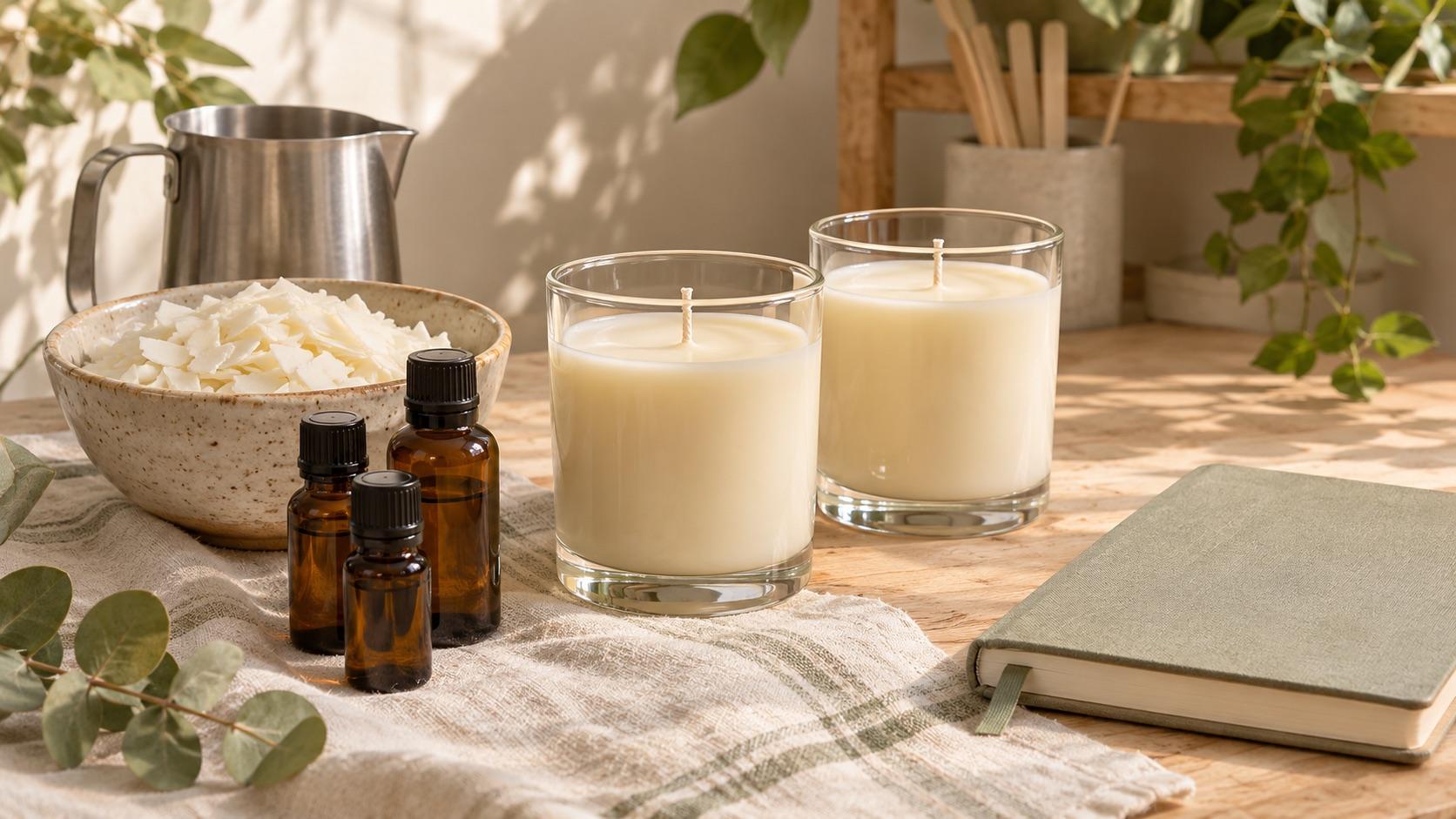
Handmade Candle Testing: How to Compare Wax and Fragrance Combinations Without Confusing the Results
A good candle test does not start with scent alone. It starts by proving that your wax, vessel, and wick behave well together, then comparing fragrance options in that stable setup so your results are easier to trust.
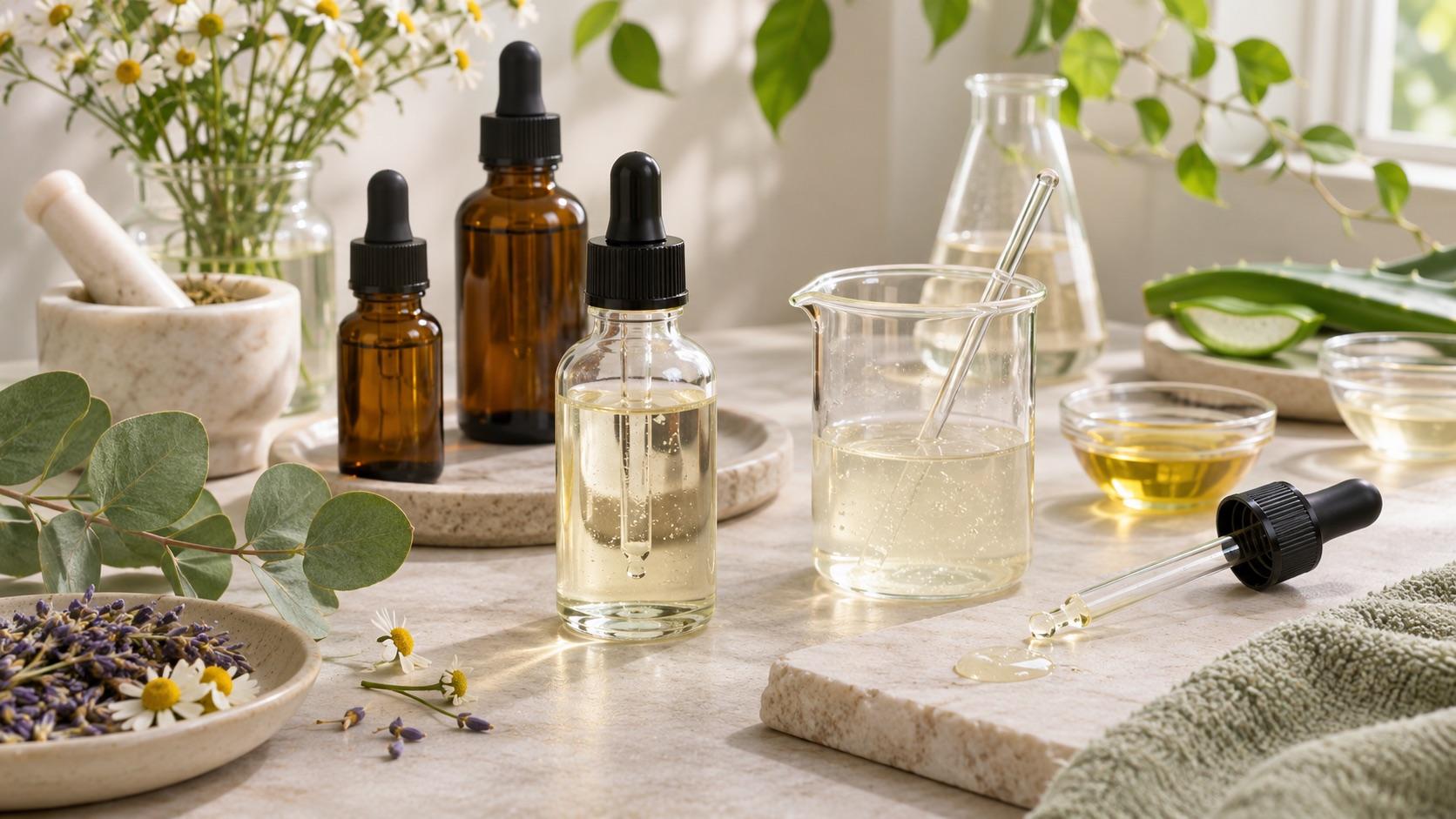
Facial Serum Formulating: How to Design a Lightweight Serum That Layers Comfortably
A lightweight facial serum is more about sensory feel than a single formula style. Here’s a practical way to prototype, test, and troubleshoot a serum that spreads easily and sits well under the rest of a routine.
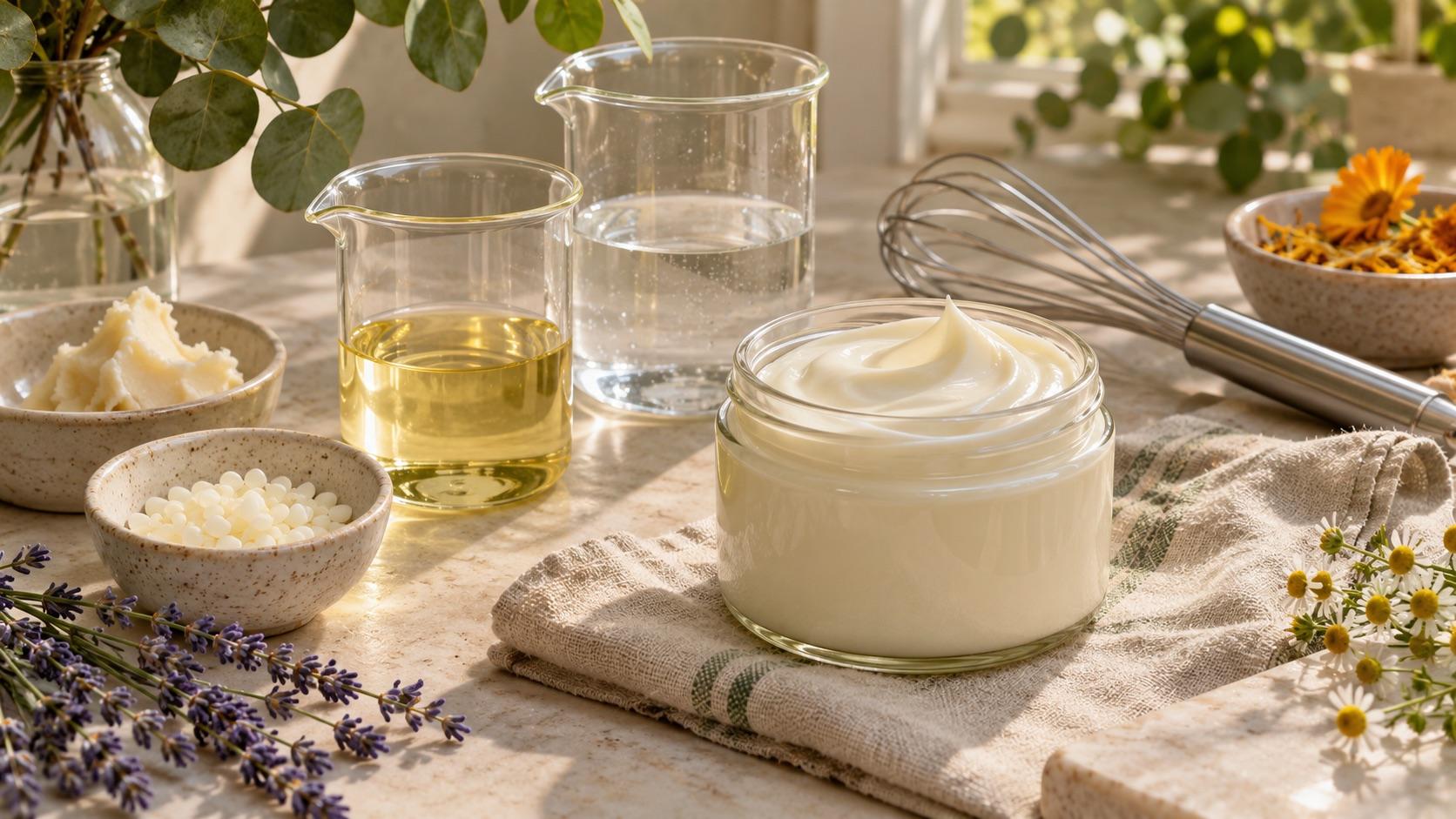
Lotion Making: What Keeps Oil and Water Together in a Homemade Lotion?
Homemade lotion stays mixed because it is an emulsion, not just oil and water stirred together. The ingredient doing the heavy lifting is the emulsifier, which helps tiny droplets stay dispersed instead of separating back into layers.