
FormulaPilot Blog
Lotion Thickness: How to Adjust Viscosity One Change at a Time
If a lotion feels too thin or too thick, the safest fix is usually not a last-minute scoop of extra thickener. Here’s how to adjust lotion viscosity one small, weighed change at a time while keeping the rest of the formula and process steady.
Explore batch records in FormulaPilot.

If your lotion comes out thinner or thicker than you wanted, the tempting move is to reach for the most obvious lever and push it hard. Add more thickener. Add more emulsifier. Blend longer. Cool it faster. The problem is that lotion viscosity is not a finishing tweak sitting on top of the formula. It is part of the formula.
That distinction matters. In an emulsion, thickness depends on the whole system: water phase, oil phase, emulsifier choice and level, any fatty alcohols or gums, process, temperature, and even how and when you evaluate the batch. A lotion that looks "fixed" on day one can still separate, thin out, or drift in feel over time.
So if you want a useful answer to the question, "How do I make this lotion a little thicker or a little thinner?" the best approach is simple: change one small thing, by weight, in a pilot batch, and compare it to an unchanged control.
Start by treating thickness as a formulation variable
A lotion’s thickness is not just about what happens at the end of mixing. Cosmetic emulsion research consistently treats viscosity as a property shaped by both composition and process, and also something that has to be checked over time, not just immediately after making the batch. That is why large jumps in emulsifier or thickener are risky. More is not automatically better, and a thicker-looking fresh batch is not proof that the emulsion is healthier.
For small makers, the practical takeaway is straightforward: if you want to adjust thickness, make the adjustment where it belongs, inside the formula record, then test it as a revised version of the product.
This is exactly the kind of iteration that benefits from formulation software like FormulaPilot. Instead of relying on memory or handwritten guesses, you can duplicate the formula, create a version with one measured change, and keep a clean record of what actually changed.
The most useful habit: keep a control batch
When makers say a lotion "came out different," there are often several variables moving at once. Maybe the gum changed, but the cool-down temperature was also different. Maybe the emulsifier increased, but the mixing time increased too. Once two or three things shift together, it becomes hard to know which one caused the texture change.
A control batch solves that.
Make a small batch of the original formula exactly as written. Then make a second small batch with one modest, weighed change. Keep the batch size, heating, mixing, cooling, packaging, and rest time the same. Compare them side by side.
That comparison gives you something much more useful than a vague impression. It gives you cause and effect.
What to change first
The right first adjustment depends on why the lotion feels off. If it is only slightly thinner than desired, a small change in the thickening system may be a better first test than a major change in emulsifier level. If it feels waxy, draggy, or overly structured, reducing the component that contributes that structure may be more appropriate than simply adding water.
What matters most here is restraint. Start with a small change, not a dramatic one. The point of a pilot is to learn what that specific formula does.
Good candidates for a first test include:
- A small adjustment to a dedicated thickener or structuring ingredient already used in the formula
- A small reduction or increase in water to accommodate that change while keeping the total at 100%
- A very modest change to the oil phase if the formula’s balance suggests that is the likely driver
What is usually not a good first move is making a large jump in emulsifier level just because the lotion feels thin. Emulsifiers help create and maintain the emulsion, but pushing them too far can change skin feel, alter viscosity in unexpected ways, and in some systems contribute to instability rather than solving it.
Keep the process boring on purpose
When you are troubleshooting thickness, boring is good. Use the same method both times.
- Same batch size
- Same ingredients and suppliers, except for the one planned change
- Same heating temperatures
- Same mixing tool and mixing time
- Same cool-down procedure
- Same fill temperature and packaging
This matters because emulsion viscosity is sensitive to processing and measurement conditions. Research on cosmetic emulsions routinely controls temperature and handling because viscosity can shift depending on how warm the product is and how much shear it has been exposed to. In plain language: a lotion can seem thinner just because it is warmer, or looser because it was recently stirred.
If you compare one batch freshly mixed and still warm against another batch that sat overnight in a cooler room, you are not really comparing formulas.
Evaluate at the same temperature and after the same rest period
This step is easy to skip, and it causes a lot of confusion.
If you want meaningful texture comparisons, decide in advance when and how you will evaluate both the control and the revised batch. For example, you might compare them after 24 hours of rest at room temperature, then check again after 1 week.
Try to keep these conditions consistent:
- Room temperature during evaluation
- Time since manufacture
- Container type
- Amount of product handled before checking
- Method of checking texture
That last point matters more than it sounds. A lotion that has just been stirred, pumped, or aggressively spread around can temporarily feel different from one that has been left undisturbed. Consistency makes your notes useful later.
Track more than thickness
A lotion can feel better and still be moving in the wrong direction.
When you compare your pilot batch to the control, note more than just whether it feels thicker or thinner. Cosmetic stability work commonly tracks visual appearance, homogeneity, pH, and viscosity over time, because emulsion problems often show up as a cluster of small changes before obvious separation appears.
A practical maker’s checklist looks like this:
- Does the lotion look smooth and uniform?
- Is there any separation, weeping, graininess, or airiness?
- Has the pH changed from the expected range?
- Does the texture stay consistent over several days or weeks?
- Does it become noticeably thinner in the bottle or jar over time?
These observations help you avoid the classic mistake of approving a formula just because the first skin feel was nice.
A simple pilot example
Imagine you have a body lotion that absorbs well but feels a little too fluid for a pump bottle. Instead of reformulating three things at once, make two small batches.
Batch A is your control: the original formula and original method.
Batch B contains one measured change intended to increase viscosity slightly, with water adjusted accordingly to keep the formula balanced at 100%.
Now make both batches the same way, let both rest for the same amount of time, and compare them at the same temperature. Then keep both and recheck them.
If Batch B is slightly thicker, still smooth, and remains stable-looking over time, you learned something useful. If Batch B is thicker at first but becomes stringy, draggy, or starts showing instability, you also learned something useful: the first adjustment was not the right one for that formula.
That is a much better outcome than making a full-size batch with several untracked changes and not knowing why it behaved oddly.
When a viscosity fix may affect preservation
Any meaningful formula change deserves a safety mindset, but changes involving water, pH, or the preservative system deserve extra caution.
If your thickness adjustment changes the water content, shifts the pH, or alters ingredients that may affect preservative performance, do not assume your original preservation approach is still adequate. FDA guidance is clear that cosmetic manufacturers are responsible for product safety, including protection against harmful microbial contamination.
That does not mean every small pilot requires a dramatic response. It means the revised formula should be treated as a revised formula, not as the old formula with a harmless tweak.
Bench success is not shelf-stability proof
A good-looking bench batch is encouraging, but it is not final proof.
Emulsion studies monitor products over time and under different conditions because viscosity changes can happen alongside instability. A lotion that seems perfect after 24 hours may thin out, separate, or drift in pH later. Packaging can also matter. A formula may behave one way in a jar and another way in a pump, especially if repeated dispensing changes how the product is sheared.
Once you find a promising thickness adjustment, test the revised formula in its intended packaging and under sensible storage conditions. Watch for changes in:
- Viscosity
- Appearance
- pH
- Separation or syneresis
- Performance during normal use
For a small maker, this is the difference between a lucky batch and a repeatable formula.
The goal is clarity, not speed
When lotion texture is off, changing everything at once feels efficient. In practice, it usually slows you down. You end up with a batch that is different, but not necessarily better, and you cannot tell which change mattered.
A calmer approach works better. Treat thickness as part of the formula. Make one small, weighed change. Keep the process constant. Compare it with a control. Check it again after resting and over time.
That method will not give you instant answers, but it gives you reliable ones. And for lotion making, reliable answers are what help you build formulas you can actually repeat.
References
- Formulation and characterization of some oil in water emulsions for cosmetic applicationshttps://www.degruyterbrill.com/document/doi/10.1515/pac-2018-0911/pdf?licenseType=free
- Development and characterization of a babassu nut oil-based moisturizing cosmetic emulsion with a high sun protection factorhttps://pubs.rsc.org/en/content/articlepdf/2020/ra/d0ra00647e
- Formulation, Characterization and Evaluation of Innovative O/W Cosmetic Emulsionshttps://pmc.ncbi.nlm.nih.gov/articles/PMC9687020/
- Anticipating cosmetic emulsion stability using a novel multi-analytical approachhttps://onlinelibrary.wiley.com/doi/abs/10.1111/ics.70047
- Microbiological Safety and Cosmeticshttps://www.fda.gov/cosmetics/potential-contaminants-cosmetics/microbiological-safety-and-cosmetics

How to Run a Useful Wick Test for a New Container Candle
A good wick test does more than produce one decent-looking burn. It helps you compare wick options fairly, spot problems that appear later in the candle’s life, and choose a wick that performs safely and consistently in your specific jar, wax, and fragrance blend.

Batch Tracking Habits Every Handmade Cosmetic and Herbal Business Should Build
Clear batch records help makers compare production runs and investigate quality concerns. Learn practical recording habits and how they differ from applicable legal requirements.
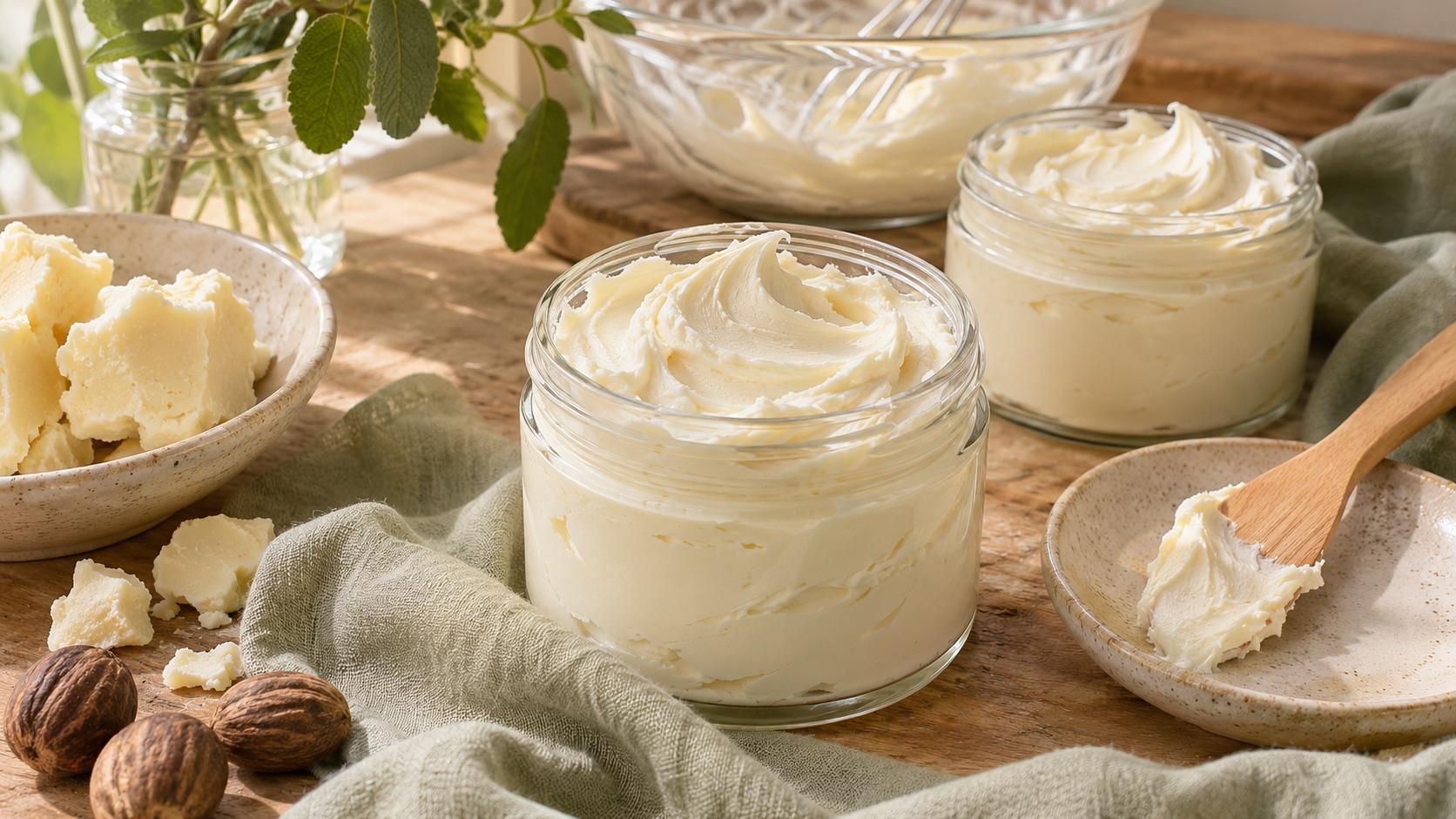
Body Butter Texture: How Cooling and Whipping Change the Final Feel
In homemade body butter, texture is shaped as much by process as by ingredients. Here’s how cooling and whipping change firmness, graininess, and fluffiness, plus a simple way to test what works for your formula.